Air Safety While Using 40w Co2 Laser Engraver
Features: Higher-Quality Components that Make Up the Fusion Laser Series
Epilog strives to provide the best of what's most important to our users - image quality, speed, reliability, and ease of use. By utilizing only the highest-quality components, Epilog Laser systems are known worldwide for their reliability and performance, which translates into less down time and more profits for you.
Superior Chassis Strength
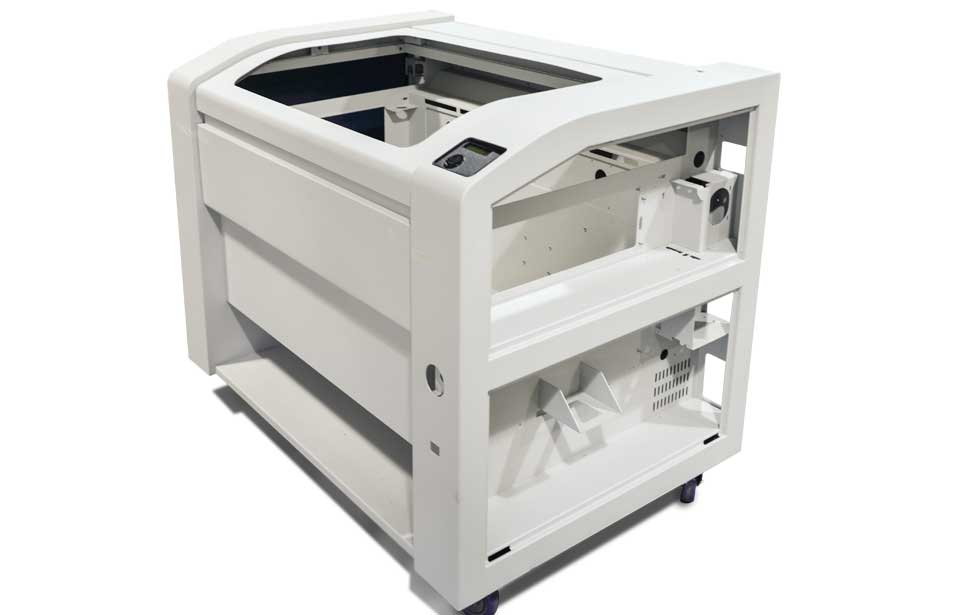
An incredibly strong, rigid chassis that can withstand the fastest laser head movement.
Joystick Controls
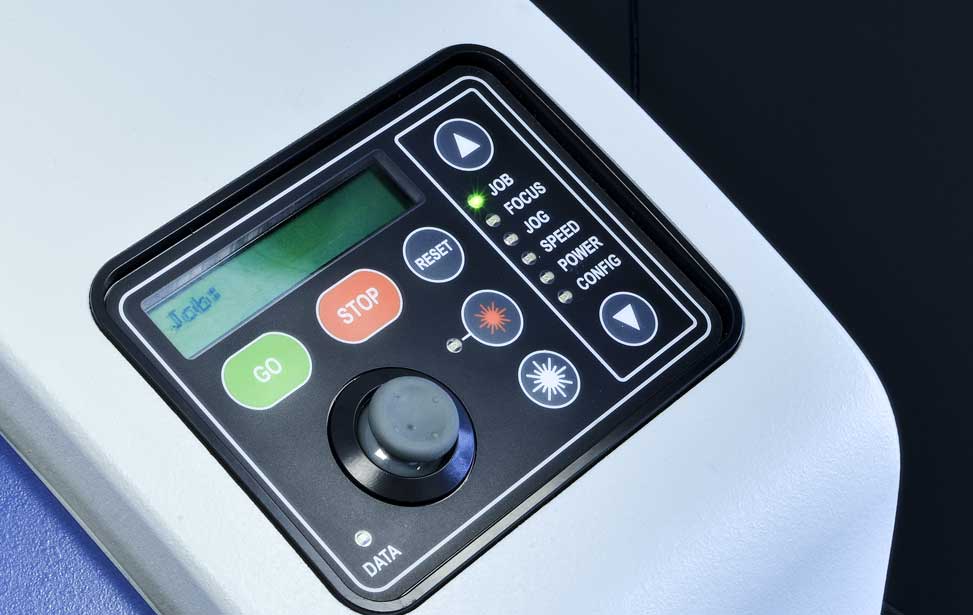
Drive the laser directly from the joystick controls located on the laser control panel.
Advanced Motion Control
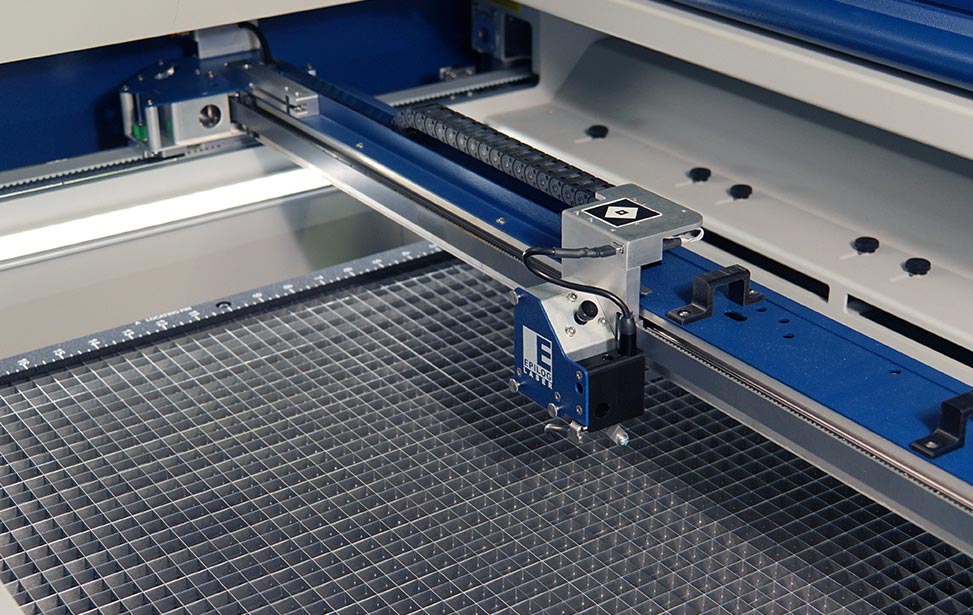
You'll see higher-speed engraving, quicker ramping speeds and highest-quality engraving and cutting.
Flame Polished Edge Cuts
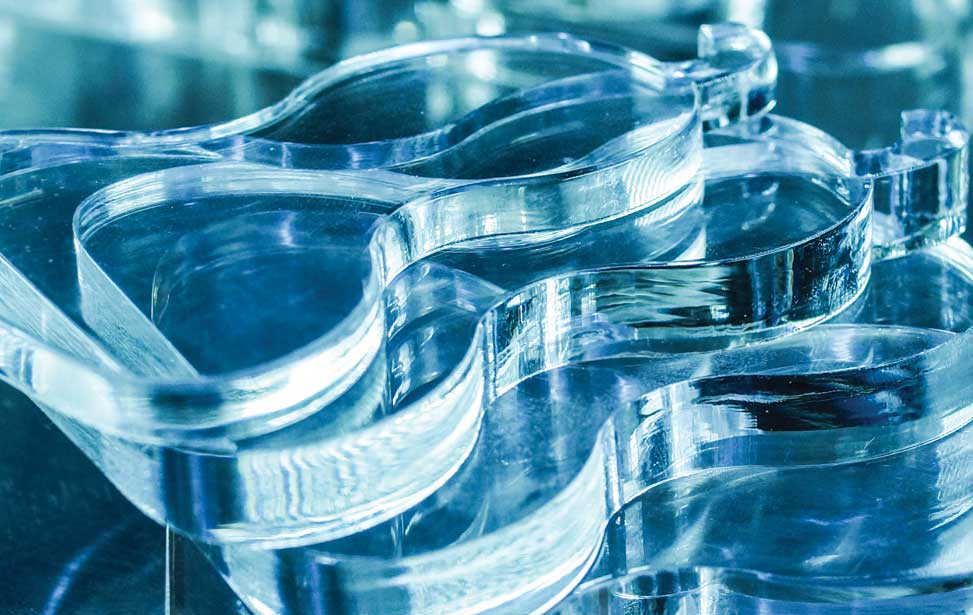
You'll achieve the best edge quality on laser cut acrylic in a small-format laser.
Temperature Sensor/Emergency Stop Button
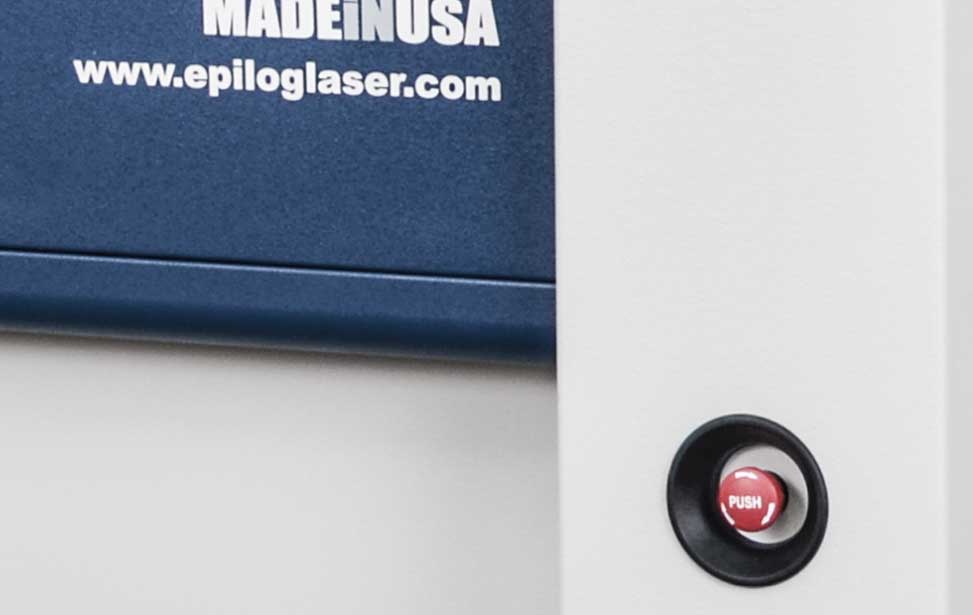
Provides the best operator safety features available for the safety of your employees and work space.
Motorized Table
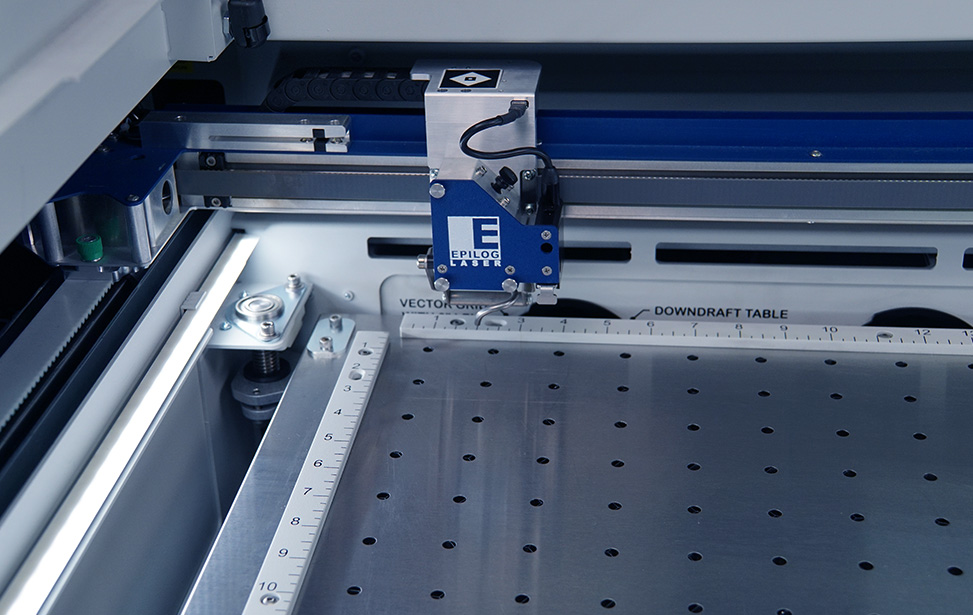
The motorized table can easily be moved up and down to fit a wide variety of engraving materials and products.
Features: How We Design the Systems for the Easiest Project Setup
Job Manager Software
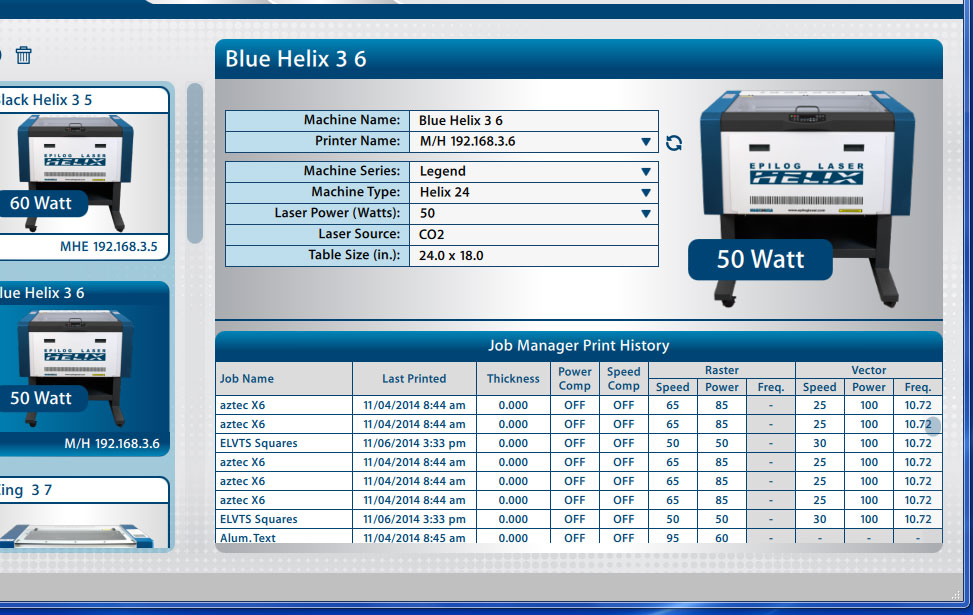
Organize the files you have sent to the laser for the best job management.
Visible Red Dot Pointer
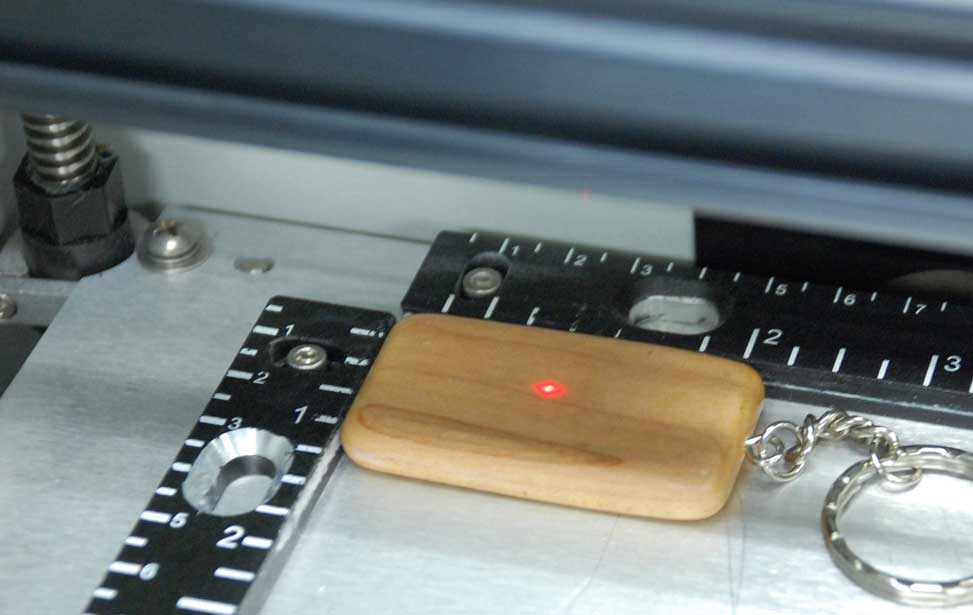
Provides a visible laser beam for setting up projects to determine exactly where the laser will fire.
Air Assist to Reduce Flare-Ups
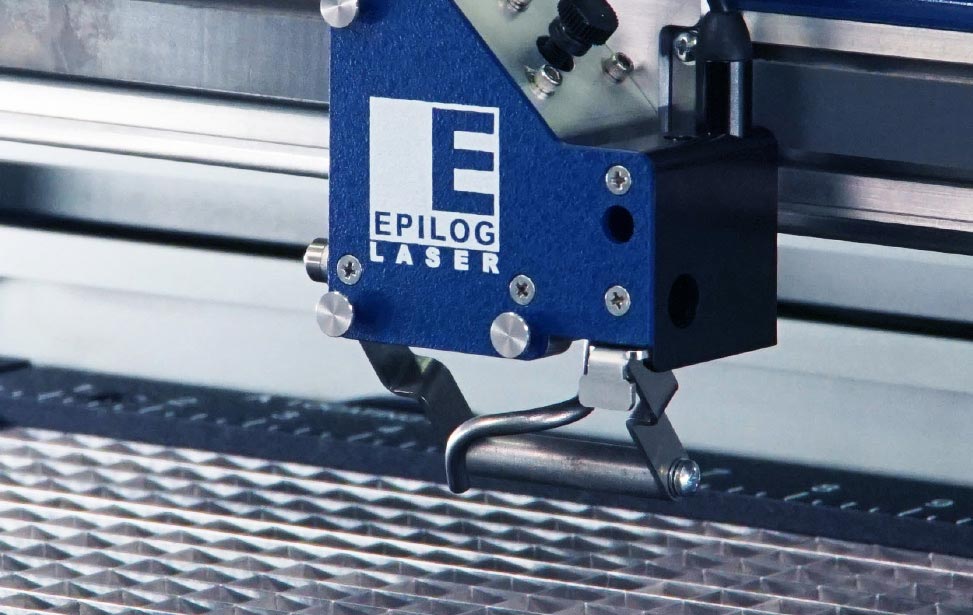
Attach to a compressor to direct a constant stream of air across the cutting surface.
Auto Focus
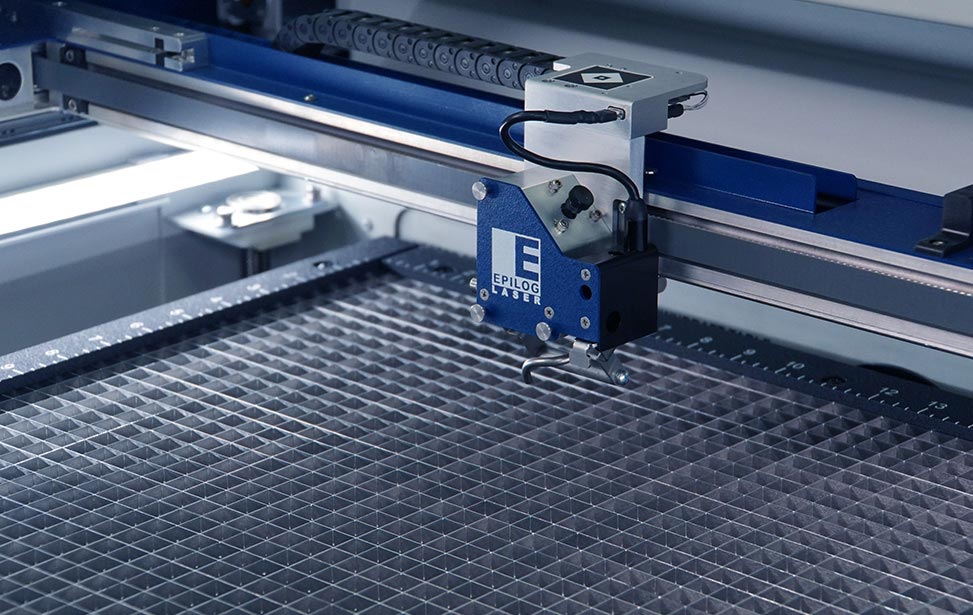
Automatically sets the correct table height for focusing the lens to achieve the highest detail engraving.
Easy-Access, Drop-Down Door
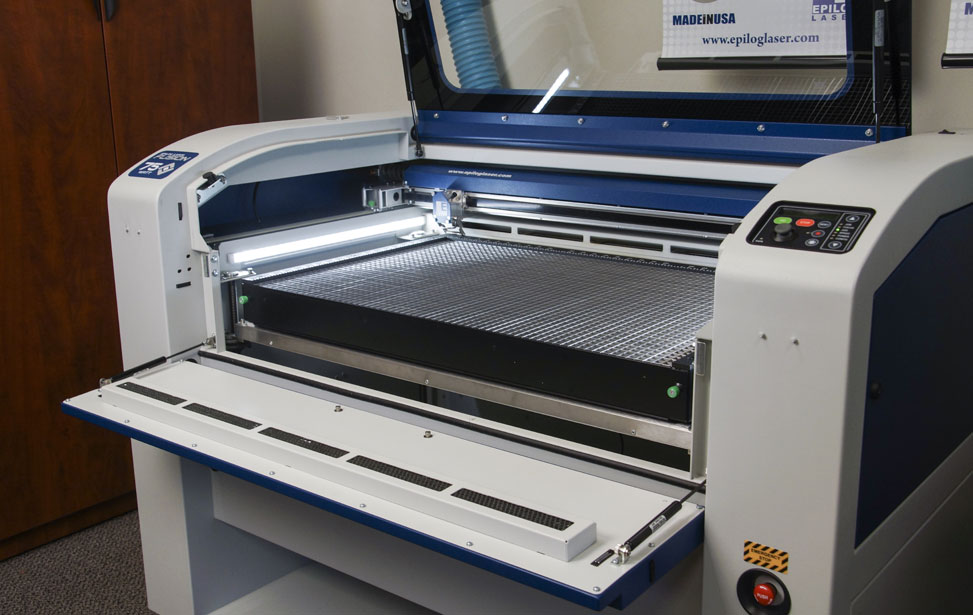
Front-access door features strong, hydraulic struts for easy access and stability.
Removable Exhaust Panel
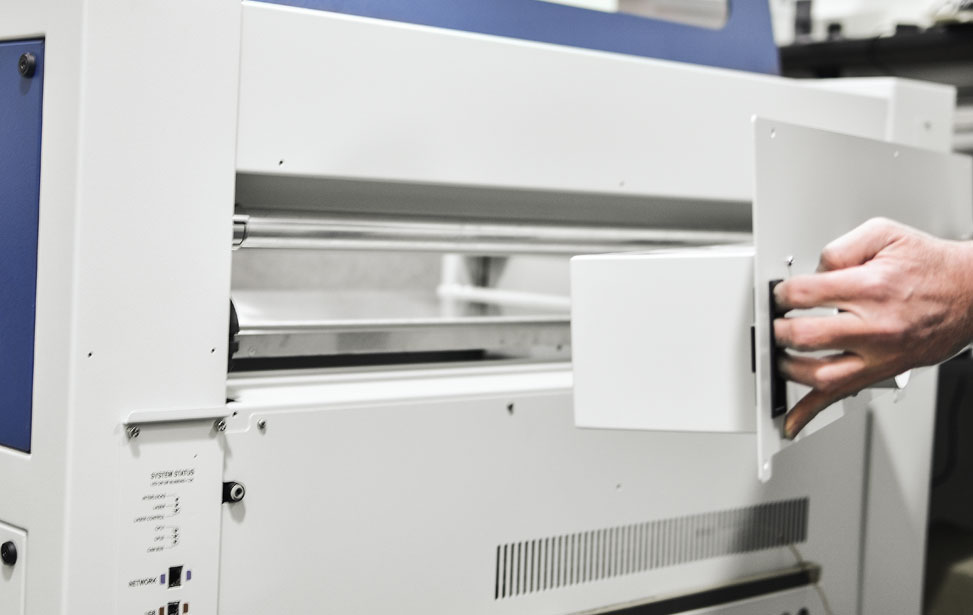
Easily access the back of your machine for easy access to clean the system.
Get even more with the Fusion M2 Fiber and Dual Source
Resources to Help You Succeed:
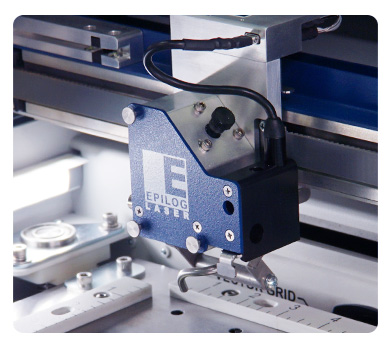
Dual Source Option: CO2 and Fiber
Add the fiber laser's metal etching capabilities to the CO2 laser's versatility.
Are you looking for the material versatility of a CO2 laser in addition to the direct metal etching of a fiber laser? Add on the dual source option to your Fusion M2 32 or Fusion M2 40 by choosing both a CO2 laser (50, 60 or 75 watts) and a fiber laser (30 or 50 watts) to work with a wider range of materials.
For more information, click here.
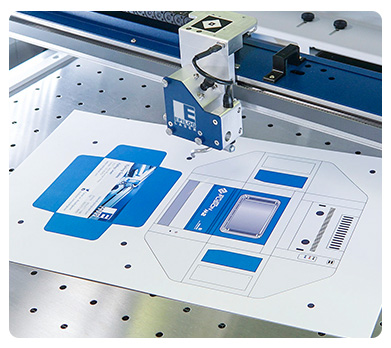
Epilog eView Camera Module
Add laser cutting to your printed projects with our unique three camera design.
The easiest, most precise method of cutting printed graphics on wood, cardboard, acrylic, paper, and more. Simply add registration marks to your printed graphic and produce precise laser cuts. The eView features three cameras located inside the system to increase cutting accuracy, including two built into the lid for the easiest positioning of projects.
For more information, click here.
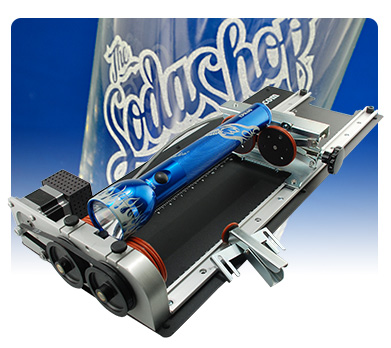
Fusion Rim-Drive Rotary Attachment
The Standard Rim-Drive Rotary Attachment allows you to engrave wine bottles, mugs, glasses and more.
Available for the Fusion Laser, the Standard Rotary Attachment adds the ability to engrave bottles, glasses, flashlights, or any other cylindrical item up to 10.25" (260 mm) in diameter. The Fusion Laser rotary attachment has been built to accommodate a large variety of shapes and sizes. Setup is as easy as placing your product on the Rotary Attachment, raising or lowering the scissor lift to level the engraving area, and printing to the laser! For more information on the Standard Rotary Attachment, click here.
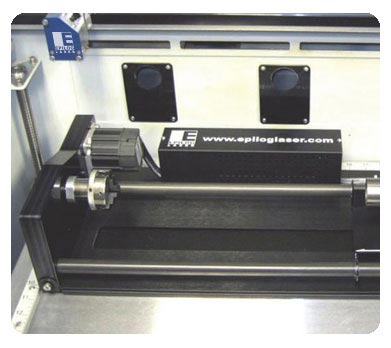
Fusion 3-Jaw Chuck Rotary Attachment
When more precision is required, the 3-Jaw Chuck Rotary Attachment is the ideal choice.
Only available for the Fusion Laser, the 3-Jaw Chuck mechanically clamps a cylinder or oddly-shaped, non-cylindrical item place as the laser engraves.
The Fusion Laser rotary attachment has been built to accommodate a large variety of shapes and sizes. Setup is as easy as placing your product on the Rotary Attachment, raising or lowering the scissor lift to level the engraving area, and printing to the laser! For more information on the 3-Jaw Chuck Rotary Attachment, click here.
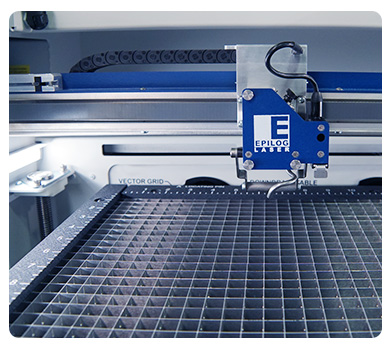
Vector Cutting Table
Raises laser cut materials off the table for better edges.
Incorporate the gridded cutting table on your Fusion laser system when cutting through materials. By raising the materials when cutting off the table, you'll be able to reduce the back-side burning on the material. Learn More.
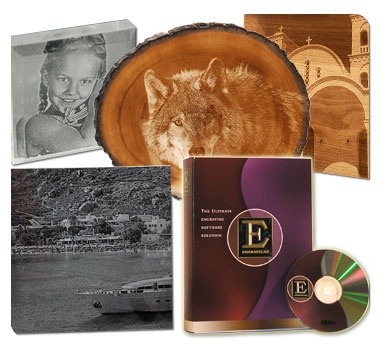
PhotoLaser Plus Software
Photo processing software that optimizes your photographs for engraving on a variety of materials.
PhotoLaser Plus takes photo engraving with your Epilog Fusion Series laser to the next level by easily processing photos for engraving on all types of materials.
Are you looking for a system that engraves outstanding photographs? How about a system that engraves photos in a consistent, predictable way for your customers?
Epilog Laser has partnered with CADLink to bring you the industry's best photo processing software: PhotoLaser Plus. The easy-to-use software interface and powerful photo processing tools allow you to create the highest-quality photo engravings in the industry.
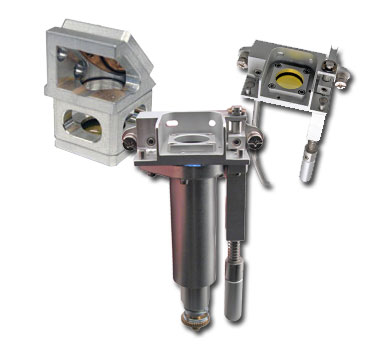
Optional Lenses
In addition to the 2.0" lens (or 3.0" lens on the dual source), we offer special lenses for specific applications.
1.5" Lens: Highest-Resolution Engraving
Although the standard 2.0 inch lens provides amazing detail, our 1.5-inch lens assembly has been designed for the highest-resolution engraving and etching of extremely small fonts.
4.0" Lens: Cutting Thicker Materials and Inside Deep Areas
The 4.0 inch lens produces a focused beam over a longer vertical distance, which makes it ideal when engraving within a recessed area of a product, such as inside a bowl or plate. The lens is also used for cutting through very thick materials.
Cone Lens: Deep Cutting with the Laser
The Cone design pushes the stream from the Air Assist down directly through the cut, rather than over the surface of the engraving material. This provides even better reduction of laser flare-ups and better edge quality.
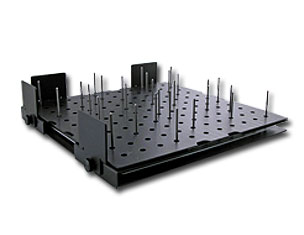
Vector Pin Table
Raise and support your cutting materials for better edge quality.
The Pin Table incorporates movable pins that can be placed anywhere along the table's grid of one inch (25.4 mm) spaced holes. The movable pins also allow the user to raise and support the cutting material in locations where the laser will not be cutting, providing a means of eliminating backside reflection. The table also allows you to place pins to support parts that would normally fall out of the cutting pattern. A handy removable surface plate makes the task of cleaning up small parts easy without removing the Pin Table.
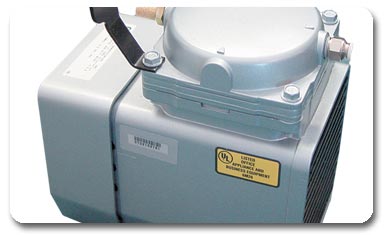
Air Compressor
Blows a constant stream of air on the cutting area.
Epilog's optional Air Compressor is available to work with the included Air Assist features of the laser systems. Direct a constant stream of air to your cutting surface to remove heat and combustible gases from the work area.
This high-quality air compressor unit feeds 30 psi of air through the Air Assist structure, giving you the best cutting results available. The rubber vibration-dampening feet reduce the noise level of the compressor, and connection is a breeze with our quick-connect inlet and outlet ports on the compressor and the laser system.
Epilog Fusion Laser Series Models
Two models to choose from to meet your needs.
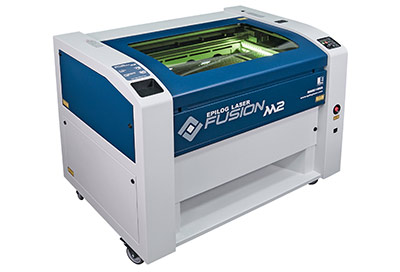
Epilog Fusion M2 32 Laser: With a large table size of 32" x 20" (812 x 508 mm), the Fusion M2 32 is our newest product offering! The high quality engraving across the entire table is a result of the highest-quality components, high-speed servo motors, and the exciting optional Dual Source and Camera Registration options.
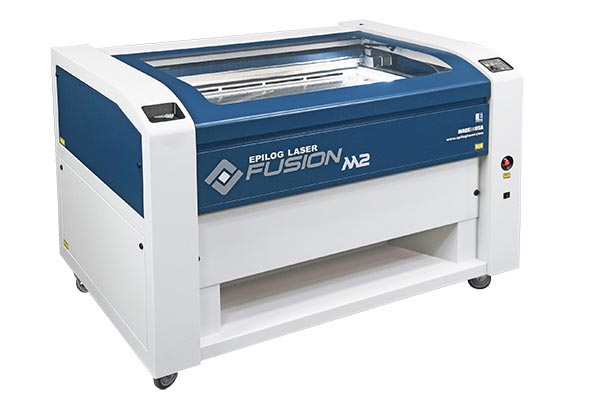
Epilog Fusion M2 40 Laser: With an oversized table of 40" x 28" (1016 x 711 mm), the Fusion M2 40 features Epilog's largest work area. This machine was designed to engrave the same high-quality image at any point on the table by utilizing our top-of-the-line motion control system and industry-leading optics system.
For more information on either of these models, fill out our brochure request form to receive engraved and cut samples, brochures and more.
Epilog Fusion Series Technical Specifications
| Epilog Fusion M2 32 | Epilog Fusion M2 40 | ||
|---|---|---|---|
| Engraving Area | 32" x 20" (812 x 508 mm) | 40" x 28" (1016 x 711 mm) | |
| Maximum Material Thickness | CO2: 13.5" (343 mm) (2" lens) Fiber: 12.5" (318 mm) (3" lens) Dual Source: 12.5" (318 mm) (3" lens) | CO2: 13.25" (337 mm) (2" lens) Fiber: 12.25" (311 mm) (3" lens) Dual Source: 12.25" (311 mm) (3" lens) | |
| Laser Wattage | CO2: 30, 40, 50, 60, 75, or 120 watts Fiber: 30 or 50 watts Dual source: CO2 50, 60, or 75 watts; | CO2: 30, 40, 50, 60, 75, or 120 watts Fiber: 30 or 50 watts Dual source: CO2 50, 60, or 75 watts; | |
| Laser Source | State-of-the-art, digitally controlled, air-cooled CO2 laser tubes are fully modular, permanently aligned and field replaceable. | ||
| Intelligent Memory Capacity | Multiple file storage up to 128 MB. | ||
| Air Assist | Attach an air compressor to our included Air Assist to remove heat and combustible gases from the cutting surface by directing a constant stream of compressed air across the cutting surface. | ||
| Laser Dashboard | The Laser Dashboard™ controls your Epilog Laser's settings from a wide range of software packages - from design programs to spreadsheet applications to CAD drawing packages. | ||
| Red Dot Pointer | Since the laser beam is invisible, the Red Dot Pointer on the Fusion Laser allows you to have a visual reference for locating where the laser will fire. | ||
| Relocatable Home | When engraving items that are not easily placed at the top corner of the laser, you can set a new home position by hand with the convenient Movable Home Position feature on the Fusion Series Lasers. | ||
| Operating Modes | Optimized raster, vector or combined modes. | ||
| Motion Control System | High-speed Brushless DC Servo Motors. | ||
| X-Axis Bearings | Ground and polished stainless steel Long-Lasting Bearing System. | ||
| Belts | Kevlar (x-axis) and Steel Cord (y-axis) belts. | ||
| Resolution | User controlled from 75 to 1200 dpi. | ||
| Speed and Power Control | Computer or manually control speed and power in 1% increments to 100%. Vector color mapping links speed, power and focus to any RGB color. | ||
| Print Interface | 10 Base-T Ethernet or USB Connection. Compatible with Windows® XP/Vista/7/8/10. | ||
| Size (W x D x H) | 52.5" x 33.75" x 40.75" (1334 x 857 x 1035 mm) 37.75" (959 mm) deep with exhaust plenum. | 60.5" x 41.25" x 42.25" (1537 x 1048 x 1073 mm) 43" (1092 mm) deep with exhaust plenum. | |
| Weight | 500 lbs (227 kg) Dual Source: 536 lbs (243 kg) | 643 lbs (292 kg) Dual Source: 679 lbs (308 kg) | |
| Electrical Requirements | Auto-switching power supply accommodates 110 to 240 volts, 50 or 60 Hz, single phase. | ||
| Maximum Table Weight | Fusion 32/40: 200 lbs (90 kg) for static and 100 lbs (46 kg) for lifting. | ||
| Ventilation System | 650 CFM (1104 m3/hr) external exhaust to the outside or internal filtration system is required. There are two output ports, 4" (102 mm) in diameter. | 650 CFM (1104 m3/hr) external exhaust to the outside or internal filtration system is required. There are two output ports, 4" (102 mm) in diameter. | |
Fusion Laser Series Videos
Watch videos about the creative laser applications available to owners of an Epilog Fusion laser system, and the wide range of materials the Epilog Fusion laser can engrave and mark.
Fusion M2 40

The Fusion M2 40 with a 40"x28" engraving area.
Watch Now
Fusion M2 Dual Source

Mark a variety of materials with the Fusion M2 Dual Source.
Watch Now
Epilog eView Software

Camera registration for laser die cutting.
Watch Now
FiberMark Fusion Demo

Watch as Bob Henry shows how to use the FiberMark and FiberMark Fusion.
Watch Now
iPad Air Laser Engraving

Watch as we laser engrave an iPad Air with our new Mac driver for the Fusion Laser.
Watch Now
Mac Driver Introduction

Watch as we introduce the world's first Mac driver for a laser system!
Watch Now
Mac Driver Demonstration

See how you can setup a file using our new Mac driver for the Fusion Laser.
Watch Now
| Engrave | Cut | |
|---|---|---|
| Wood | x | x |
| Acrylic | x | x |
| Fabric | x | x |
| Glass | x | |
| Coated Metals | x | |
| Ceramic | x | |
| Delrin | x | x |
| Cloth | x | x |
| Leather | x | x |
| Marble | x | |
| Matte Board | x | x |
| Melamine | x | x |
| Paper | x | x |
| Mylar | x | x |
| Pressboard | x | x |
| Rubber | x | x |
| Wood Veneer | x | x |
| Fiberglass | x | x |
| Painted Metals | x | |
| Tile | x | |
| Plastic | x | x |
| Cork | x | x |
| Corian | x | x |
| Anodized Aluminum | x | |
| Stainless Steel | * | |
| Brass | * | |
| Titanium | * | |
| Bare Metals | * | |
| * CO2 lasers will mark bare metals when coated with a metal marking solution. For more information, visit our laser metal marking page. | ||
| Do you have a material you would like us to test? Our Applications Team would be happy to assist you. | ||
Where are the laser systems manufactured?
We're proud to say that all Epilog laser systems are 100% designed, engineered and manufactured in the USA at our headquarters in Golden, CO.
Can I make money with a laser?
Yes! Personalization and customization of products is in high demand. Adding a laser engraving service to your current operation is an excellent way to reach possible new customers as well as offer a valued service to your current client base. If you have any doubts about the profitability of owning a CO2 laser system, visit our Applications page or read our many Customer Success Stories.
For some insight into the profitability of laser engraved products, take a look at the website for LaserBits, a supplier of laserable materials. There you will find purchase prices for raw laserable materials and suggested retail prices for those same products once they have been laser engraved.
Also check out our new Guidebook to Starting Your Own Engraving & Cutting Business to see the ins and outs of starting a new laser business.
What types of graphics can I engrave and cut?
You can engrave scanned photos, logos, bitmaps, other images, text, and AutoCAD files. Essentially, if you can print it, you can engrave it.
To cut, you will need a vector based graphic, such as an .eps or Illustrator file.
Keep in mind the higher the quality of the graphic you're working with, the better your engraving results.
Can Epilog's lasers engrave on metal?
Yes. Our fiber laser systems are capable of permanently marking nearly all types of bare metal. The fiber laser line was designed with a combination of affordability and high quality results in mind. The Fusion M2 series features a 32" x 20" (812 x 508 mm) or 40" x 28" (1016 x 711 mm) work area. The flat-bed, flying-optic design of the Fusion M2 is revolutionary for a fiber laser system and will mark metals over a large work area in a short amount of time.
And, though our CO2 laser systems are mainly designed to engrave and cut non-metallic materials, they can also be used to mark on metal with the aid of metal-marking compound. Download our PDF to learn more about marking metal with a CO2 laser system.
Can Epilog's lasers cut through metal?
Since we use low power CO2 (30 to 120 watts) and fiber lasers (10 to 50 watts) the beam will clearly mark on coated and raw metal but our systems are not ideally suited for metal-cutting applications. Our fiber laser systems may be compatible for cutting some thin metals as we have seen success cutting thin foils, up to .012", with our fiber lasers.
Please contact our Applications Lab to discuss your metal-cutting applications and see if they can work with our systems!
Is the laser safe to operate?
Yes, the laser is completely safe to operate. It is a Class 2 laser - 1 mW CW MAXIMUM 600-700 nm, which means that the laser is secured with interlock devices so it will not run with the doors of the system open. No special safety gear is required to run the laser.
How much does it cost to operate the laser?
The cost of operating the laser can be easily figured out by plugging your electricity rates into the following formula using even our highest wattage laser, the 120 watt.
Typical Max power consumption = 1560 Watts (This assumes full power, constant laser on.) If power costs $0.075/KWH in your area, it is costing $0.117/hour to operate the laser. Or, about 12 cents per hour, or 96 cents per eight hour day. (1560 x .075)/1000 = .117
Do I need separate laser systems for engraving and cutting?
No, one laser does it all! Our CO2 laser systems will engrave and cut most non-metallic materials, as well as engrave coated metals. For information on what materials you can engrave and cut, visit our Materials page.
The laser can be set to engrave only (Raster Mode), cut only (Vector Mode), or can complete both operations in Combined Mode. The laser knows what portions to engrave and what portions to cut based on line width, which is easily set in your graphic design software.
What are the computer requirements?
Investing in a new computer is a great way to make sure you're getting the most out of your new laser equipment. Why? Because today's software requires a lot of computer processing speed and memory to function properly. A good computer won't make a huge difference in how your laser runs, but when compared to a slow computer it will save untold amounts of time and frustration setting up the artwork that you "print" to the laser. Many users do not purchase new computers for use with their new laser because their current computers are perfectly adequate. There's no magical cut-off that makes a computer too slow. If you're comfortable with the performance and speed of your current computer, there's probably no reason to purchase another one. The following recommendations are just options to consider if a new computer is necessary.
A new computer doesn't have to be expensive to work well! Even many of today's lower-cost computers work well for laser applications. As long as you don't buy the cheapest computer you can find you should be fine. One thing to avoid is the Intel Celeron processor – while they are good processors, and will work with the laser, they don't process graphics with the speed most laser users desire.
- Operating System: All new Epilog lasers are designed to work with all versions of Windows 2000, XP, Vista, 7, 8, or 10 operating systems.
The Fusion Laser Series is also compatible with Mac operating systems OS X 10.7 and higher. Read more about our Fusion Mac Driver here.
- RAM (Random Access Memory): 512 MB is recommended. RAM is kind of like short-term memory. It's fast, readily available for the computer to access and makes time consuming tasks go much quicker if you have lots of it. Most users won't notice a difference if they add more than 512 MB to their system, but almost all uses will notice the speed difference that 512 MB provides when compared to 256 MB (256 MB is essentially the next step down from 512 MB).
- Processor Speed: A faster processor will allow you to do more tasks in less time. While it's not necessary to purchase the fastest processor available, you'll want either an AMD Athalon processor or an Intel Pentium IV processor (do not purchase a computer that is using an Intel Celeron processor – they're too slow for graphics applications). Processor speeds are always improving, but processor speeds of about 2.0 GHz or faster are a good place to start.
- 10/100 Network Interface Card (NIC): All new computers have a 10/100 network connection as standard equipment. As well as allowing multiple computers to be linked together in a network, this technology also allows direct printing from the computer to the Epilog system. Epilog supplies a network Crossover cable with each laser system that allows one computer to print to a single Epilog system.
- 20-30 GB Hard Drive: This is the permanent memory in your computer. Many users feel that you can never have a large enough hard drive, but for most laser applications 20 or 30 GB's is going to be adequate for years of storage. Luckily, most computer manufacturers put at least 20 GB drives in new computers these days. When in doubt, buy bigger than you think you might need. It's so inexpensive that it's worth the peace of mind to have it available.
What is the maximum diameter that will fit on the Rotary Attachments of the Fusion Series?
Rim-Drive Rotary Attachment: 10.25" (260 mm) outside
3-Jaw Chuck Rotary Attachment: 6.5" (165 mm) outside, 3.125" (79 mm) inside
What is the accuracy of the Fusion Series?
+/- .01" (0.254 mm) over the entire table
What is the spot size of the Fusion Series?
0.003" - 0.005" (0.0762 - 0.127 mm)
What is the maximum table weight of the Fusion Series?
Fusion 32/40: 200 lbs (90 kg) for static and 100 lbs (46 kg) for lifting.
Didn't find the answer to your question?
Email us or give us a call at +1 303 277 1188. We're happy to supply all of the answers you're looking for.
Fiber Laser FAQs
What is the laser source of the Fiber Laser?
The source is a fiber laser: a fiber optic cable that has been doped with ytterbium, a rare earth element.
Is it the same as a YAG (yttrium aluminum garnate) laser?
The fiber laser produces the same wavelength of light and the same marks. YAG lasers typically require cooling and more maintenance.
Is the wavelength of light dangerous?
Yes, especially to the operator's eyes. Additionally the wavelength will pass through common Lexan or glass materials, which is why the viewing window has been impregnated with an organic compound that absorbs the fiber energy. Do not run the laser with the safety locks defeated.
What is the power consumption of the Fiber Laser?
The fiber laser pulls 8-10 amps on a 110-volt circuit, and 4-5 amps on a 220 volt circuit.
How deep can it engrave into metal?
All metals can be engraved into with some depth; however, some metals are more amenable to depth engraving. Softer aluminum material will engrave with depth with only a few passes. The best way to test your material is with our Applications Lab.
How thick can the Fiber Laser cut?
The Fiber Laser can only cut through very thin gauge metals. We've had success at cutting up to 0.012" (.30 mm) thick metals.
Will it mark black oxide or similar dark metal parts?
Yes, by using the polished mark settings for bare metal, the black oxide color will be removed to expose the lighter native metal color.
What is the cost of the Fiber laser system?
Systems start below $35,000 (US price only) for a 30 watt system.
Is the Fiber Laser right for my application?
Let's find out! Fill out our request form to receive a brochure and samples. Or contact our Applications Lab to get started testing your materials.
Receive a Brochure and Samples
Receive brochures and samples, and get more info from us or your local distributor.
Air Safety While Using 40w Co2 Laser Engraver
Source: https://www.epiloglaser.com/laser-machines/fusion-laser-series.htm
0 Response to "Air Safety While Using 40w Co2 Laser Engraver"
Post a Comment